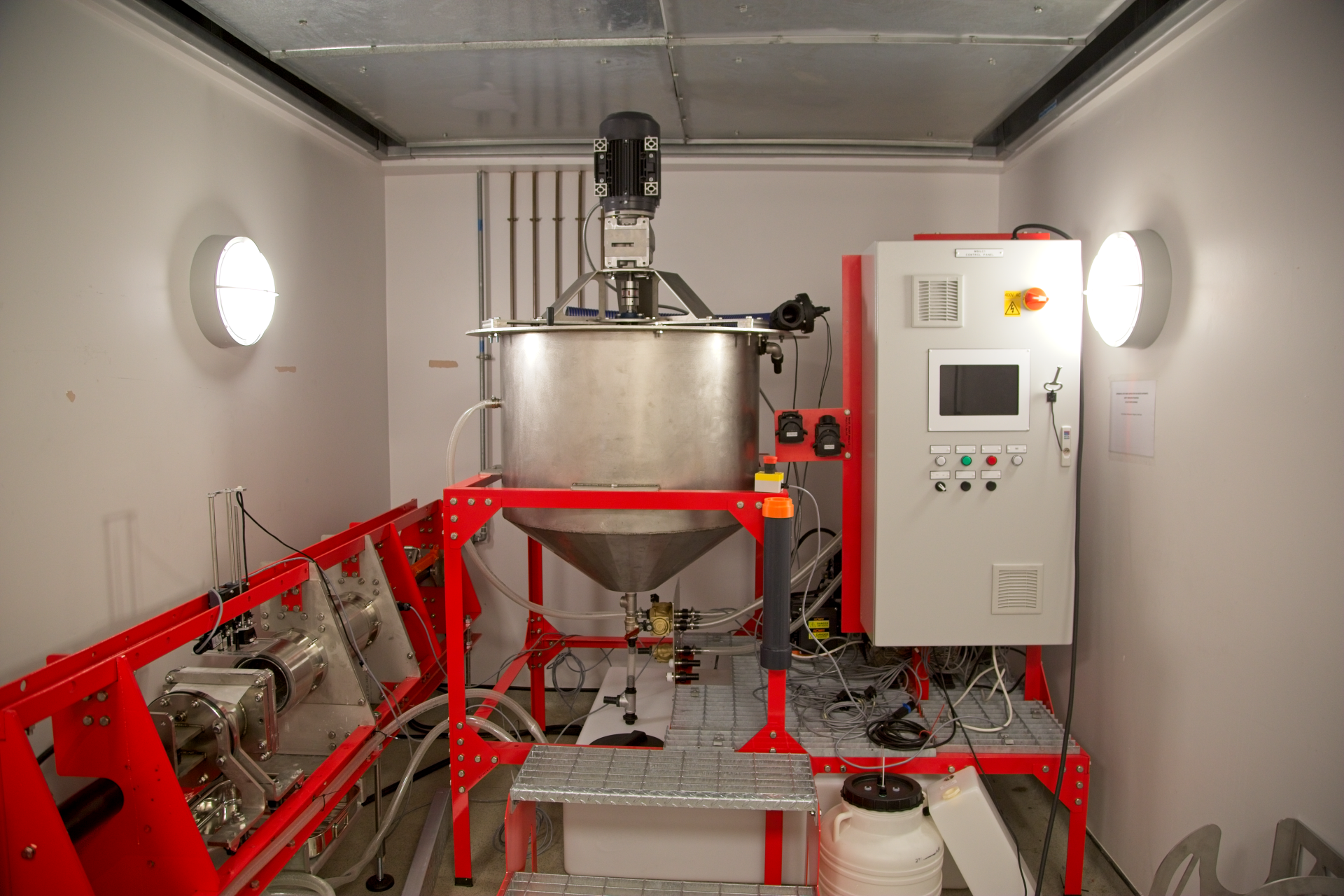
One of our theses is that new science ends up blocked by unsuitable off-the-shelf hardware. This project tells that story beautifully — Professor Siddharth Patwardhan invented a new process for manufacturing mesoporous silica, but the project sat on the shelf for three years because there wasn’t an effective off-the-shelf solution to scaling.
In 2024, we worked on a scale-up plant for producing mesoporous silica nanoparticles. Heading into the project, the biggest uncertainty was the filtration system. The nanoparticles are synthesised in a suspension in a 300L reactor, but we wanted them in a dry powder. Existing lab filtration methods weren’t working for us. We had an idea for making an at-scale filter process but before that needed a proof-of-concept. This is the story of how we designed, built, and tested a filter press in four weeks.
Isolating nanoparticles
Having synthesised nanoparticles, you’re left with a suspension. In the lab, the group used centrifugation and vacuum filtration to turn this suspension into a slurry, and then an oven to turn it into a dry powder. This works for a gram or two, but if you want kilos of nanoparticles, then you’re going to need to boil off litres of water in the oven. The energy required throws away all of the efficiencies gained from using Siddharth’s novel synthesis process.
A new downstream process was needed to make dry powder. In industry, you’d typically use big drum filters or a large filter press. These both work by using high pressure to force a slurry against a filter — squeezing water out to make a moist “cake”. Unfortunately, a moist cake isn’t good enough — we need a very dry cake.
| Industrial filtration systems | Our goals |
|---|---|
| High-throughput | 300 L every few hours (low throughput) |
| Very expensive | Cheap enough for an academic group |
| High-filter area | Produce a very dry cake |
| Produce a moist cake | Ideally, wash the cake |
Piston press
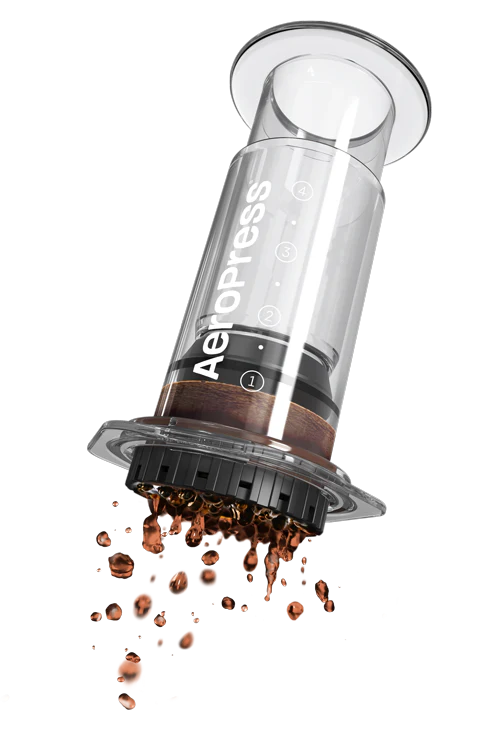
Rather than a traditional filter press, what we really needed was an industrial Aeropress. The concept is simple — use a piston to press the fluid against a filter at 20-50 Bar.
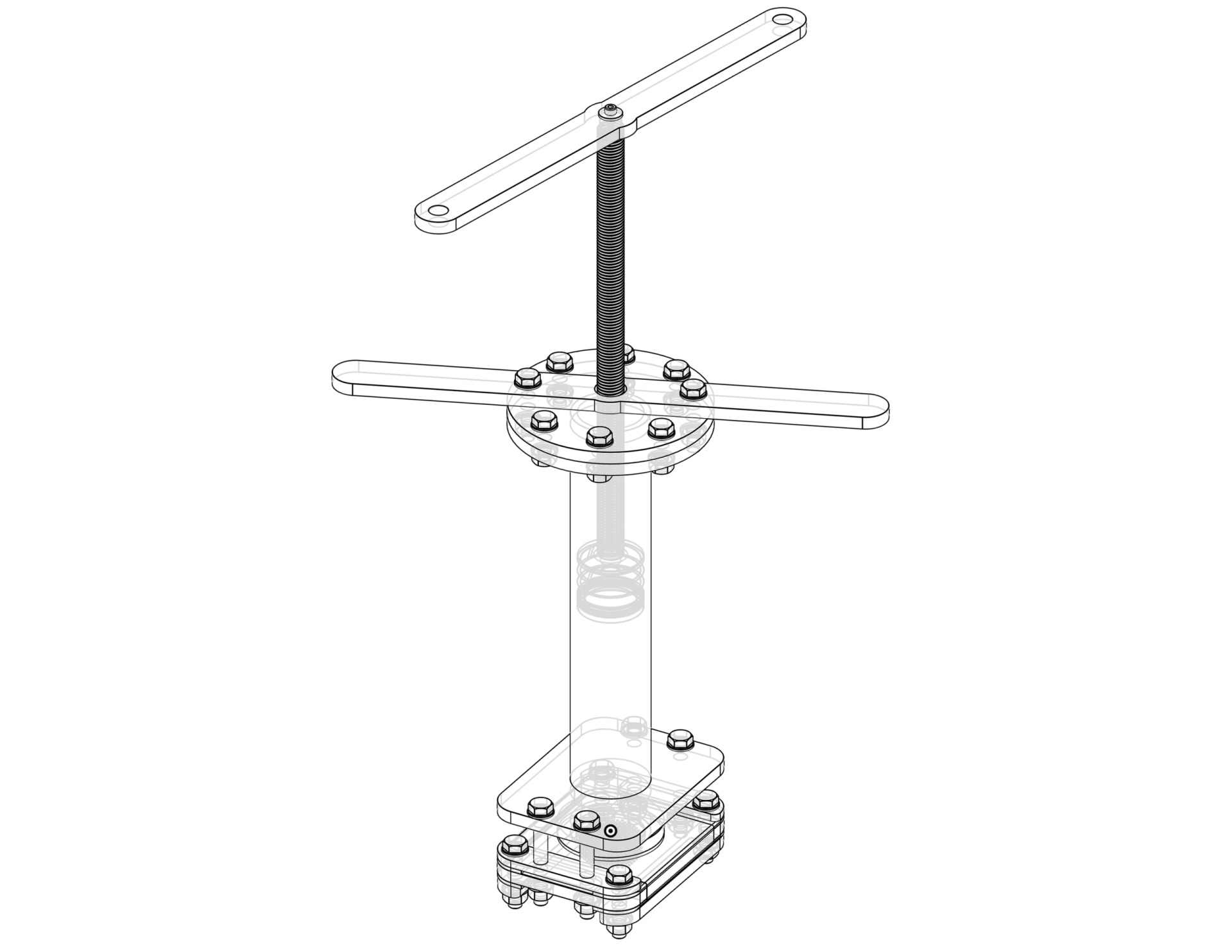
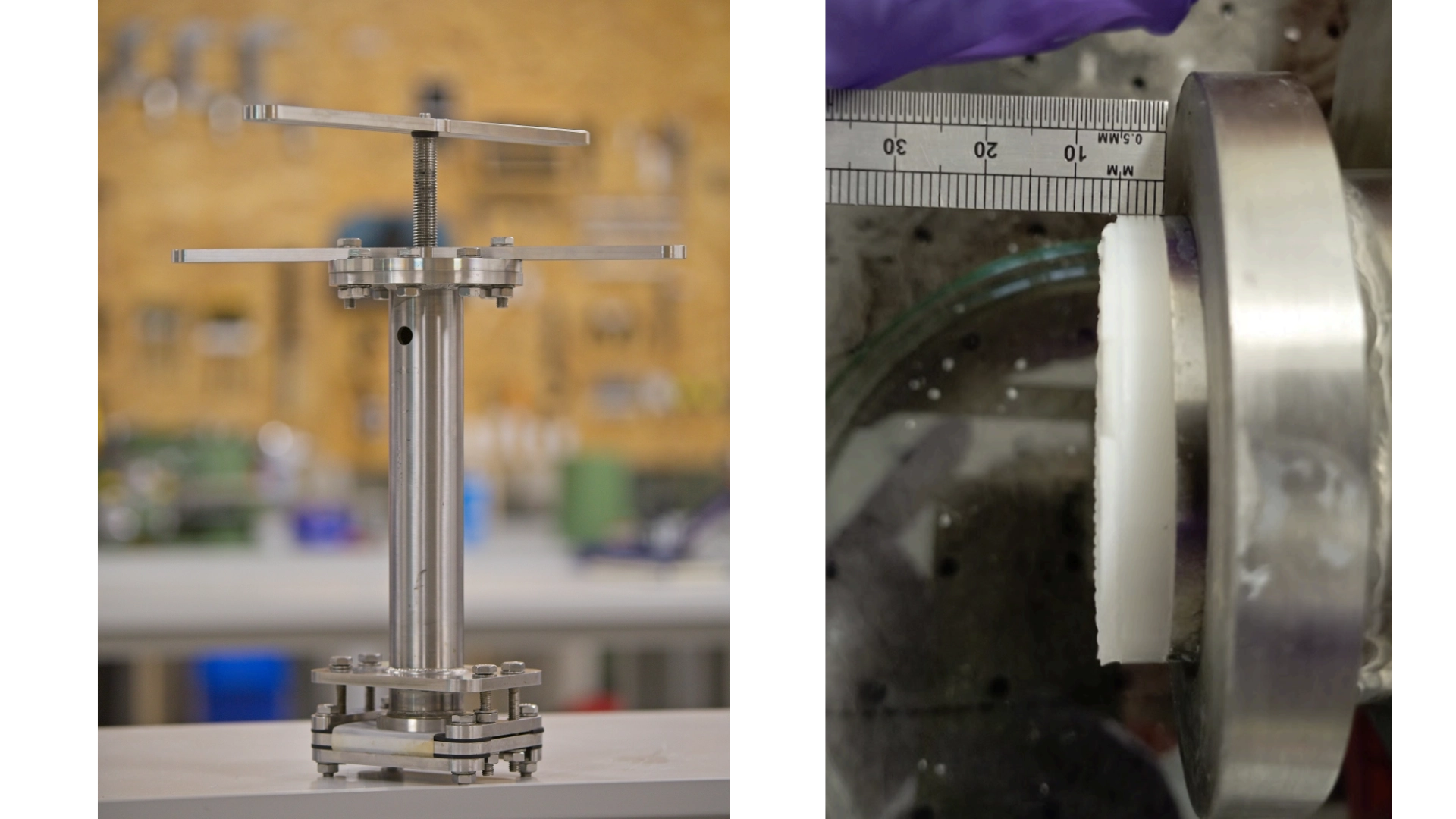
We had the concept, but needed to de-risk it. Over a few evenings, Andy threw together a design for a hand-cranked piston press. To optimise for speed, we used:
- Mostly laser-cut and welded stainless steel parts
- Only two precision-machined parts: a machined and polished bore and a machined piston
- Only made drawings for the detailed parts and for the assembly. Everything else was a DXF output to save time
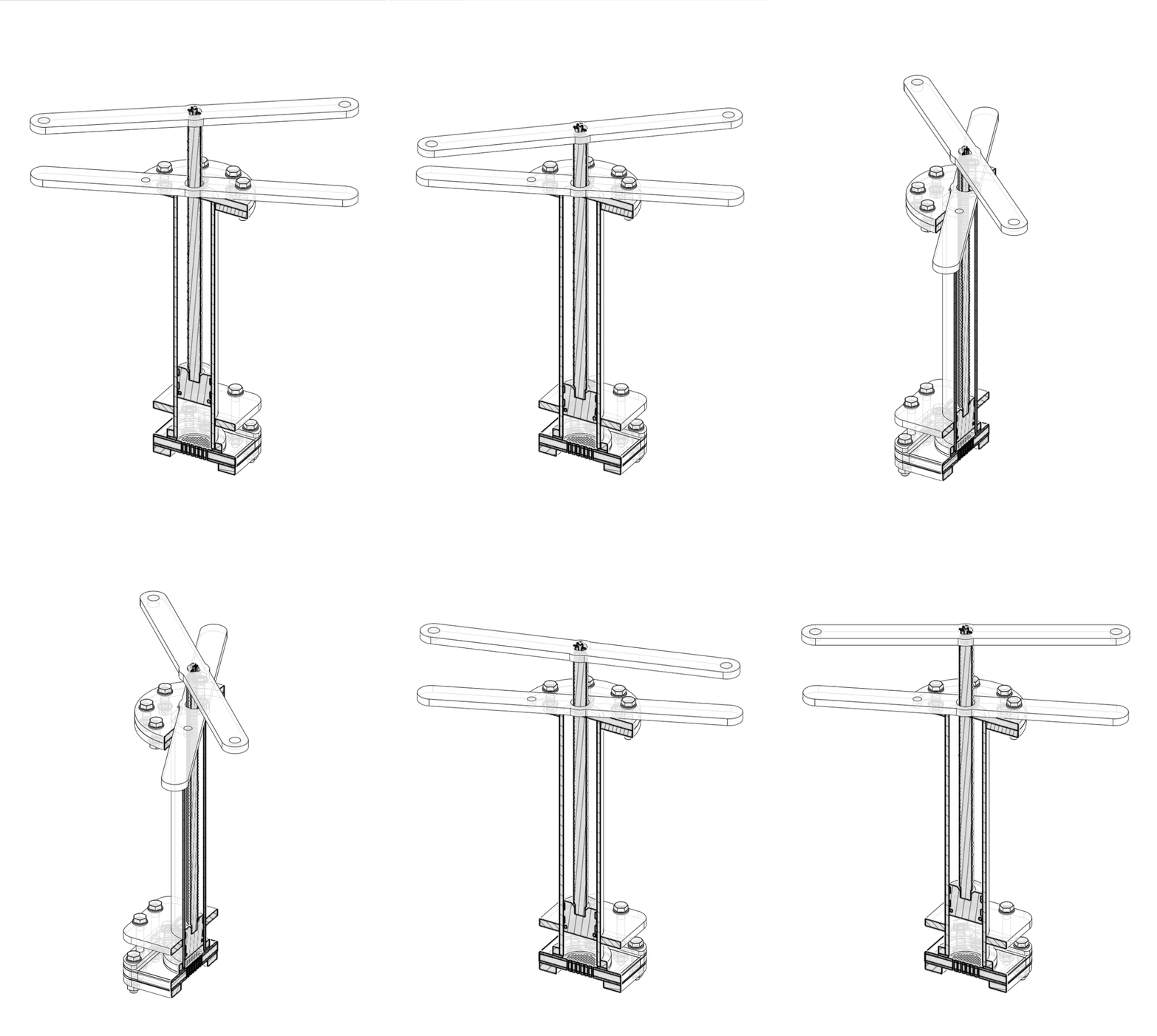
The filter press is pretty simple; the only slight complexity is introduced by needing to produce 50 Bar. This requires well-specced seals and well-machined parts.
We used seals and guide rings designed for hydraulic rams for our design. We weren’t size-constrained, so we used two guide rings rather than one to ensure it worked first time, and put the seal at the front to stop the solid particles from interacting with the guide rings.
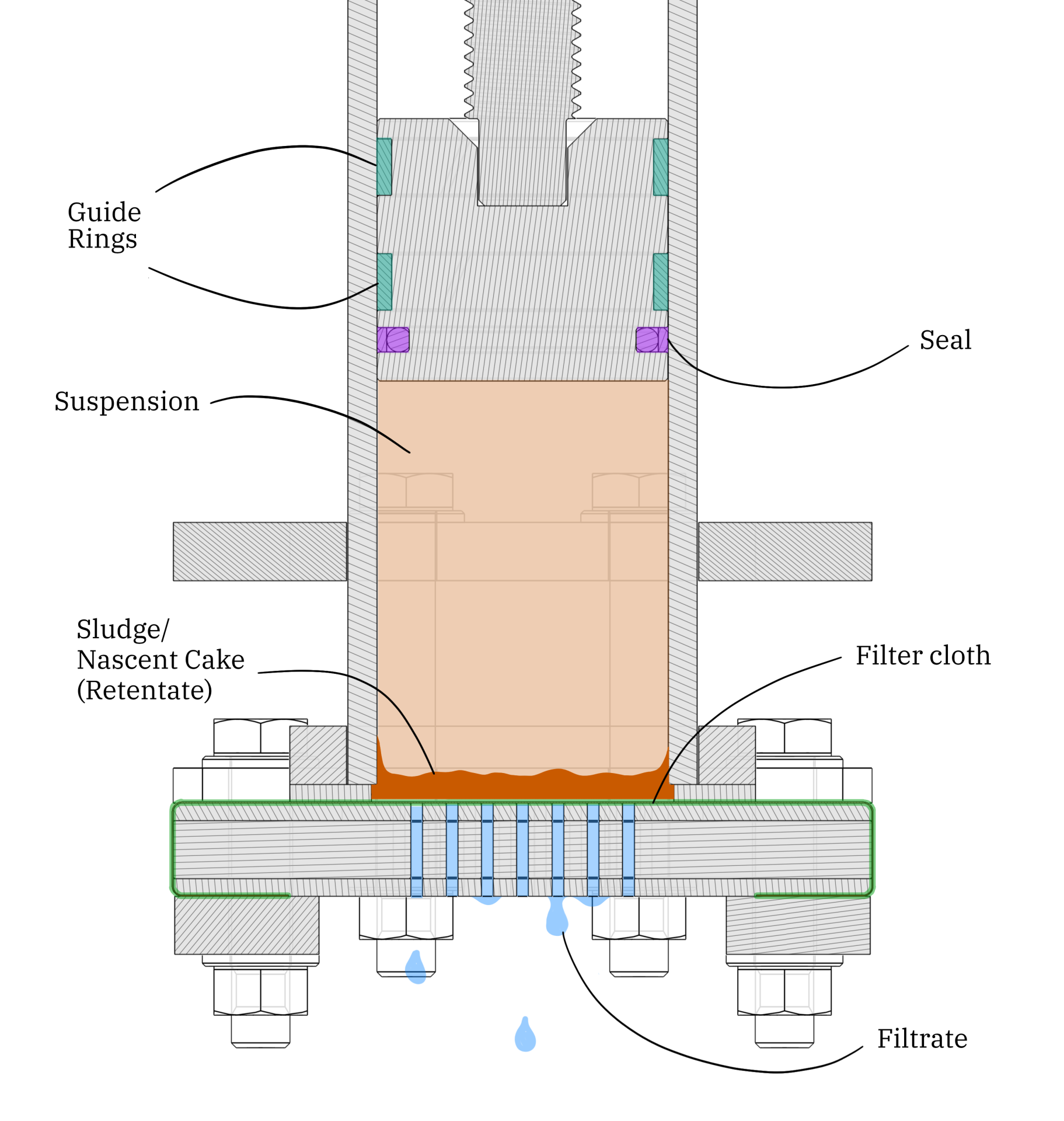
We designed everything around SKF seals and guide rings — but found that they’d take a few weeks to arrive! We found a third-party alternative that could get us seals in under a week. The SKF catalogue is really great for selecting the right seal, but we were forced to swap them out to hit the iteration pace that we wanted on this project.
Using the filter press
An Aeropress has a very fine filter to stop any coffee grounds from making it into your cup. Our filter process is a little different — we use the filtrate cake as well as the filter cloth to filter the suspension.
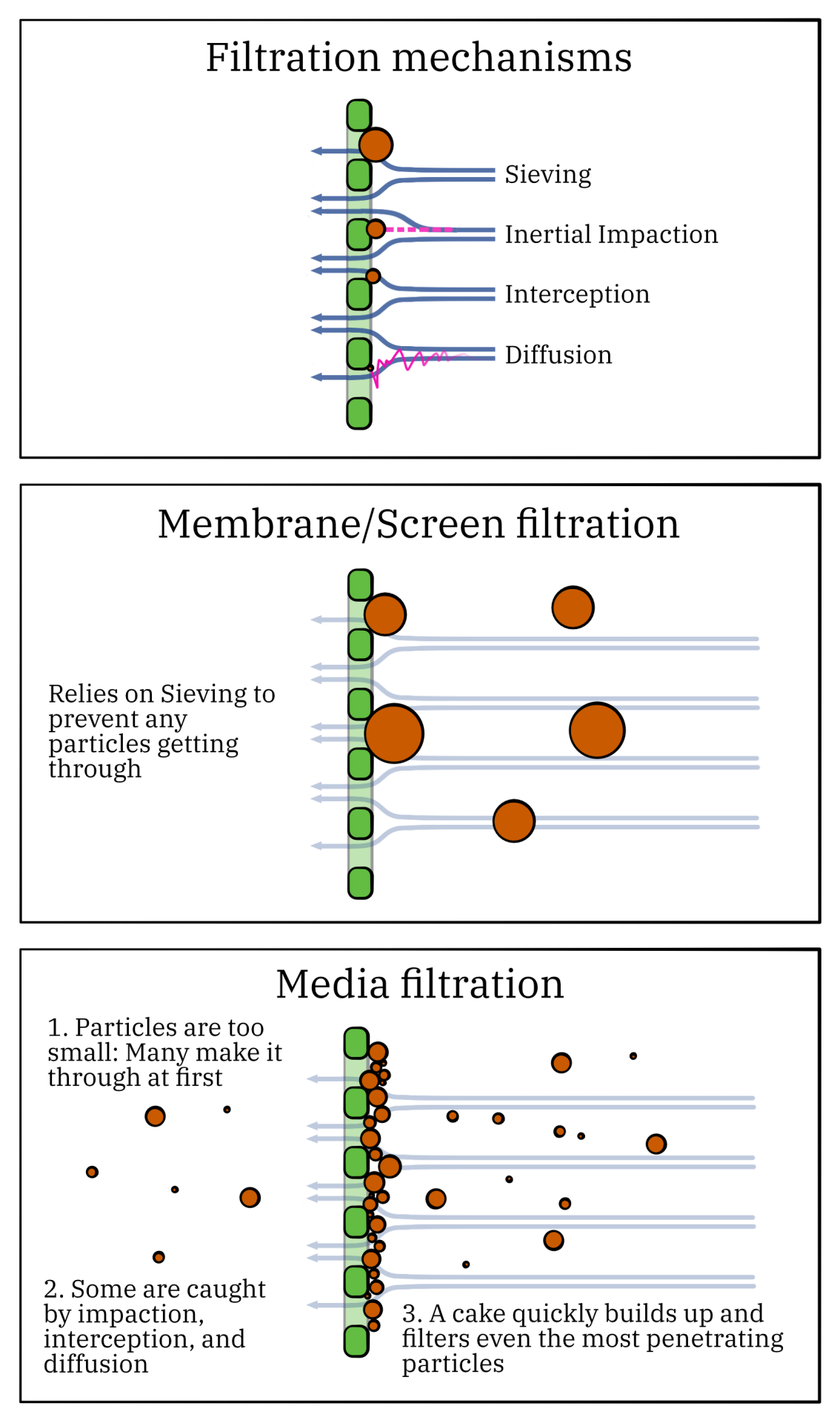
As with all things traditional industry, filter cloth is on a long lead time. We needed to immediately know whether a filter press was a goer. Andy knew that Atlantic Pumps probably still had some filter cloth from when Andy and Matt had toyed with a different idea for cement filtering. Ed kindly delivered the 2.5m rolls of filter cloth to Andy’s parents-in-law, who crammed them into their campervan to drop off at Amodo HQ.
Once we had the press and the cloth, we were straight into the lab testing with nanoparticles.
| Test day 1 | Started with a coarse filter | Yields: 12%, 4.8%, 10.8% |
| Test day 2 | Swapped to a fine filter | Burst! The fine filter meant the pressure was too high, and the cloth burst. |
| Test day 3 | Changed plate to add more support | Yields: >90% |
Good enough! We could test forever, but after all, this was just about proving the concept could work.
Iterating through different filter cloths and different loading concentrations let us quickly get to something that worked. If we’d had more filter cloth in stock from the start, then this could have taken a day rather than a week.
We had successfully foreseen one issue ahead of time. This was the size of the holes in the plate that sat after the filter. During the second round of testing, the filter cloth burst, but because we’d thought about this ahead of time and ordered three versions of the filter plate, we were able to swap in a new plate the next day and get successful results.
There was a point during the testing where we needed a modification to be made to the filter press. The press was too big to get on our lathe, but we really needed the changes to be made quickly. We phoned around the local machine shops, and none of them had the capacity to make the changes. We really needed the changes made, so Matt turned up to the closest machine shop to our office and exchanged a box of biscuits for a two-hour turnaround on the parts!
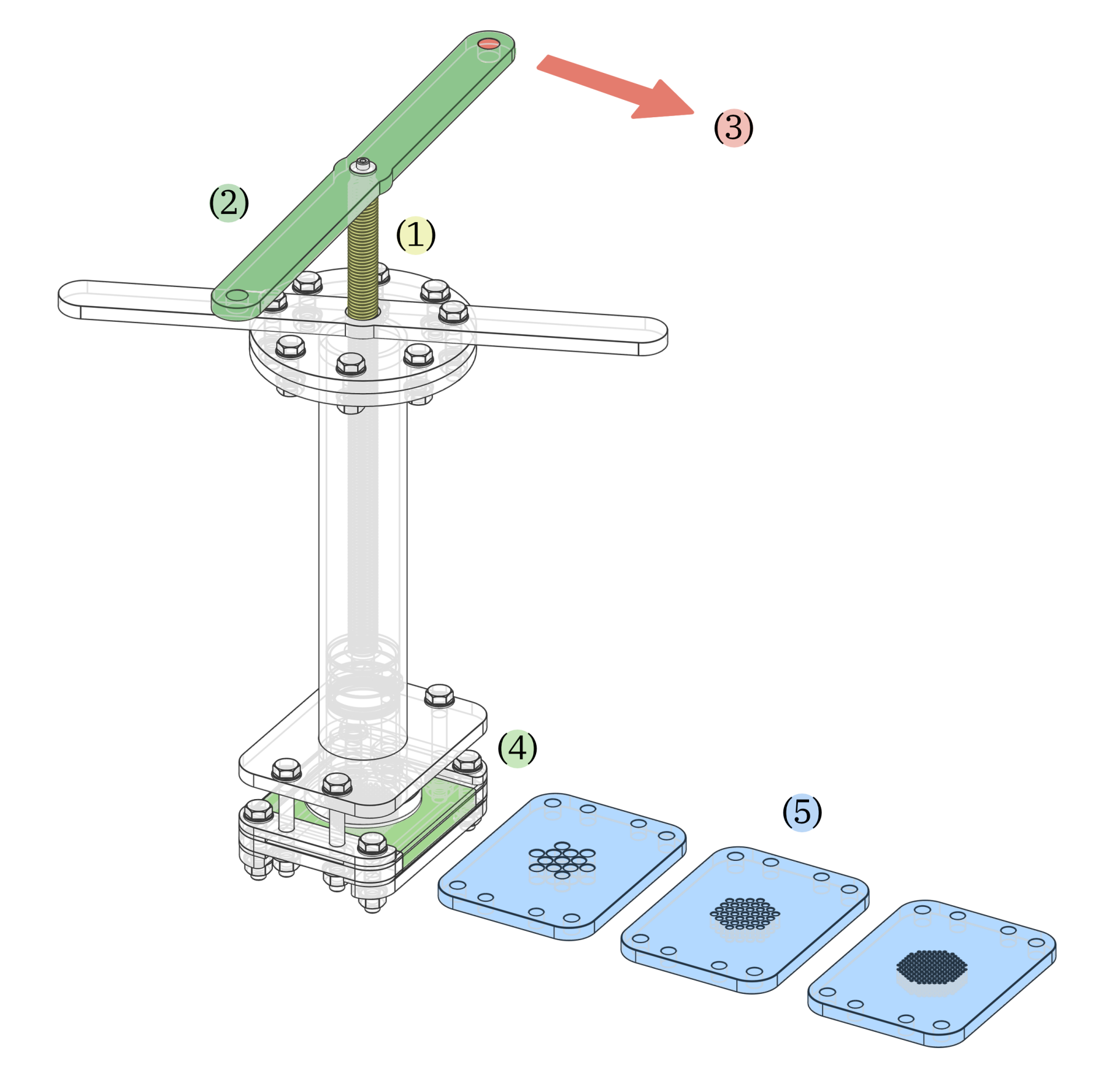
(1) M20 Thread to drive the piston. We knew it would get chewed up and not last, but this was a quick POC, and we wanted something that would be really easy for the machine shop to make.
(2) Handle size calculated to correspond to the force needed for our initial pressure goals.
(3) Used a cheap hanging scale from a previous project to measure force. No fancy feedback loop: human being trying to pull at a constant force.
(4) Easily swappable filter cloth. Made so that we can easily test lots of different cloth types.
What was next?
This proof-of-concept showed that we could use a filter press to get a dry mesoporous silica cake. We’d de-risked the key part of the design and could head into creating a fully automated mesoporous silica pilot plant.